Passing a first aid evaluation is equal components expertise, muscle mass memory, and calm under pressure. If you are preparing for a Maitland emergency treatment course or CPR training Maitland session, a little structure in your prep work goes a long means. I have actually trained thousands of learners throughout health, building and construction, child care, and neighborhood sporting activity. The people who wind with assessments do not just "recognize the responses." They understand why activities matter, they exercise till activities really feel natural, and they arrange little details that protect against last‑minute stress.
This guide distils what aids most for learners heading right into a first aid course in Maitland, whether you are going after a first aid certificate Maitland for work compliance or updating skills with a mouth-to-mouth resuscitation correspondence course Maitland. You will certainly discover practical guidance on research study emphasis, hands‑on drills, regional context, and the subtle judgment calls assessors seek. It is created genuine life, not simply the classroom.
What assessors really look for
Whether you enlist in a first aid and mouth-to-mouth resuscitation course Maitland for the first time or participate in among the lots of Maitland emergency treatment courses as a refresher course, assessment criteria correspond. Assessors search for secure scene monitoring, correct sequence of activities, quality of CPR compressions and air flows where suitable, and ideal use of tools. They also observe soft abilities that matter in emergencies. Can you give clear guidelines to an onlooker to call 000? Do you check for risks carefully? Are you happy to stop, reassess, and adapt if something changes?
In method, that suggests the adhering to styles go through the situations:
- A quick, systematic scene check utilizing DRSABCD, then definitive action Quality compressions in your mouth-to-mouth resuscitation Maitland session: proper price, depth, and recoil Early defibrillation with an AED and safe pad placement Prompt use of a pressure bandage or tourniquet for severe bleeding Communication that is tranquil, details, and audible
If you are doing a Maitland first aid training course that integrates emergency treatment and mouth-to-mouth resuscitation Maitland content, anticipate the CPR component to be examined separately. Assessors generally time 2 minutes of constant compressions for grownups, and frequently run a baby and kid situation if your unit includes those age groups.
Set yourself up a week ahead
People typically leave preparation up until the night before. That is usually when stress and anxiety hits. Instead, front‑load the essentials a week prior to your first aid training in Maitland and relocate into targeted technique as the day approaches. Beginning by validating the exact units of proficiency and pre‑course requirements. Numerous service providers in Maitland emergency treatment training deal blended first aid Maitland shipment with an eLearning module. You will certainly do better if you do not rush that module.
In the same window, manage the tiny logistics. Inspect the place and parking, specifically if your session is in central Maitland where daytime vehicle parking fills promptly. Set out activewear or job clothing you can stoop in without difficulty. If you have knee problems, load a little pad or towel. Moisten well and intend a treat that does not surge your blood sugar.
Focus your research study on the "why," not simply the "what"
You do not require to memorise a textbook. What you require is a psychological design that overviews quick choices when information obtain unpleasant. Concentrate on the following anchors and connect them to the physiology behind them:
- DRSABCD works due to the fact that it prioritises reversible killers: respiratory tract obstruction, lack of breathing, and heart attack. Discover the series up until it is 2nd nature. CPR purchases time. At 100 to 120 compressions per minute and concerning one 3rd chest depth in kids, roughly 5 to 6 centimetres in grownups, you circulate oxygenated blood to the brain and heart. Quality beats perfection. Keep your rate, deepness, and recoil steady. An AED is secure for lay responders and analyses rhythm automatically. Early shocks during a shockable rhythm significantly boost survival. You will not hurt a heart in regular rhythm by applying pads and complying with prompts. Bleeding control saves lives. Direct stress, altitude when useful, and a firm, correctly placed pressure plaster or tourniquet can turn a fatal bleed into a survivable injury. Time matters; mins count with arterial bleeding.
Tie those concepts to actual scenes you know. If you are an instructor at Maitland Park, imagine a collapse on the oblong with a defibrillator in the club. If you work at a vineyard in Lovedale, visualise equipment injuries and the distances for rescue access. If you commute the New England Highway, believe vehicle collisions and fuel dangers. Context helps memory stick.
Make the manikin your ally
Your mouth-to-mouth resuscitation course Maitland will certainly consist of hands‑on exercise with manikins, and that is where lots of students either grow or falter. The distinctions between "looks alright" and "passes assessment" are not subtle to a seasoned assessor. You can tilt the probabilities your way with a few habits.
Plant your knees close enough to the manikin that your shoulders rest straight over your hands. Lock your joints simply sufficient that you relocate from the hips. Suspend loud for speed. If you aim for the beat of "Stayin' Alive," you are close to 105 beats per min. View your recoil. Totally launch between compressions without raising your hands. If the course covers rescue breaths, develop a good seal, delicately lift the chin, and give one 2nd per breath while viewing the breast increase. A superficial upper body increase suffices, and anything more threats stomach inflation.
Breath decisions generate stress and anxiety in analyses. If your device of competency enables compression‑only CPR, and you are not positive with breaths, inform your assessor you will certainly do hands‑only mouth-to-mouth resuscitation for the circumstance. You will not be penalised where guidelines permit it, especially in inexperienced spectator contexts. If the unit calls for breaths, exercise with a pocket mask before evaluation day when possible. Ask your fitness instructor to watch 1 or 2 cycles and offer mentoring. A thirty 2nd modification today saves an anxious retake tomorrow.

Smart ways to learn DRSABCD without chanting
Chanting a phrase assists, yet emergency situations hardly ever check out like checklists. Layer your discovering. Initially, claim the steps out loud while aiming at imaginary dangers in a space. Then, established a two minute timer and role‑play the opening of a circumstance: you approach, check for threats, slap your hands, speak with the "casualty," and signify a spectator to call 000 and bring the AED. Finally, practice the link in between "unresponsive and not breathing normally" and "begin compressions now." That jump is where seconds leakage away.
If you are taking a mixed Maitland emergency treatment training course with online modules, do the air passage and breathing area two times. When to comprehend, as soon as to embed. Repeat any kind of videos revealing head tilt, chin lift, and checking for typical breathing. Typical breathing is not the same as occasional gasps. When you understand that difference, you call it properly under stress.

The one bag to load the evening before
Treat your assessment day like a brief area task. Tighten your logistics so your head stays totally free for the work.
- Photo ID, course confirmation, and any kind of finished eLearning certificate Comfortable clothing you can kneel in, plus a light layer for air‑conditioned rooms A tiny canteen and a simple treat like a banana or muesli bar Reading glasses if you use them, and any type of knee support you need A note pad with a few trigger words: DRSABCD, 30:2, 100-- 120, AED pads top‑right/ side‑left
Lay the bag by the door prior to you sleep. It appears basic. It is additionally how you arrive without a scramble.
Maitland specifics: venues, onlookers, and equipment
First aid training Maitland often runs in blended teams: moms and dads, tradies, carers, trainees, and hospitality crews. Anticipate dynamic circumstances with diverse viewpoints. That variety aids due to the fact that actual scenes rarely match a book. The various other trait to Maitland emergency treatment is location. The Hunter River, wineries, light sector, and active arterial roadways produce different dangers. An assessor might weave a scenario that reflects a heat‑stressed runner near the shore, a crush injury at a storage facility, or a motorbike crash on a semi‑rural road.
Many workplaces and clubs in Maitland have AEDs on site, but not all team know where. If your evaluation consists of an AED, presume one neighbors and delegate early. Usage certain language. As opposed to "Can a person get assist," indicate a person, give a straight guideline, and ask to return and report. Assessors notification that quality. If you become part of a club or workplace, discover your AED place today. In a genuine emergency, those thirty seconds are gold.
Common risks and exactly how to beat them
After years of enjoying evaluations with First Aid Pro Maitland design programs and similar regional companies, the exact same mistakes turn up:
Learners fail to remember to look for threats. They rush to the casualty and miss power lines, traffic, or bodily liquids. Pause beside the scene, scan delegated right, and say what you see. You will certainly get credit rating for that discipline.
Compressions drift. The very first thirty compressions look great, the last thirty are shallow or sluggish. Pass over loud, and do not be shamed to exchange if your fitness instructor uses a break in a two rescuer drill. Exhaustion shows faster than you think.
AED pads take place wrong. Go for the top right upper body listed below the collarbone and the left side under the armpit. If in doubt, adhere to the image on the pads. Never put pads over apparent drug spots or implanted devices; move slightly to the side.
Learners miss gloves or eye protection in bleeding situations. Also in a class, mime donning handwear covers or claim "I would apply gloves or make use of an obstacle." Assessors intend to hear your infection control plan.
Over speaking the scenario. You do not need a monologue. Short, decisive expressions make confidence: "Less competent, not breathing generally. Beginning mouth-to-mouth resuscitation. You, call 000 currently and bring the AED."
Beyond CPR: emergency treatment abilities most likely to be assessed
Your Maitland emergency treatment training course will certainly not be only mouth-to-mouth resuscitation. Anticipate to show bleeding control, shock monitoring, choking action, and typically the essentials of burns, fractures, and seizures.
For bleeding, put strong direct stress initially. If blood soaks through, include more dressings without getting rid of the initial. For severe limb bleeding where straight pressure is not managing it, a tourniquet put high and limited can be life‑saving. If your Click here for more unit covers tourniquets, find out positioning and tightening till hemorrhaging stops. You should note the application time and be planned for discomfort, which is normal.
Choking is nuanced. Coughing is safety, and you encourage it if the casualty is relocating air. If the individual is battling to breathe, can not talk, or loses consciousness, intensify. For grownups and children, back impacts and chest thrusts are basic. For a baby, utilize the right positioning supported along your lower arm with the head less than the body. Trainers look for safe handling as high as sequence.
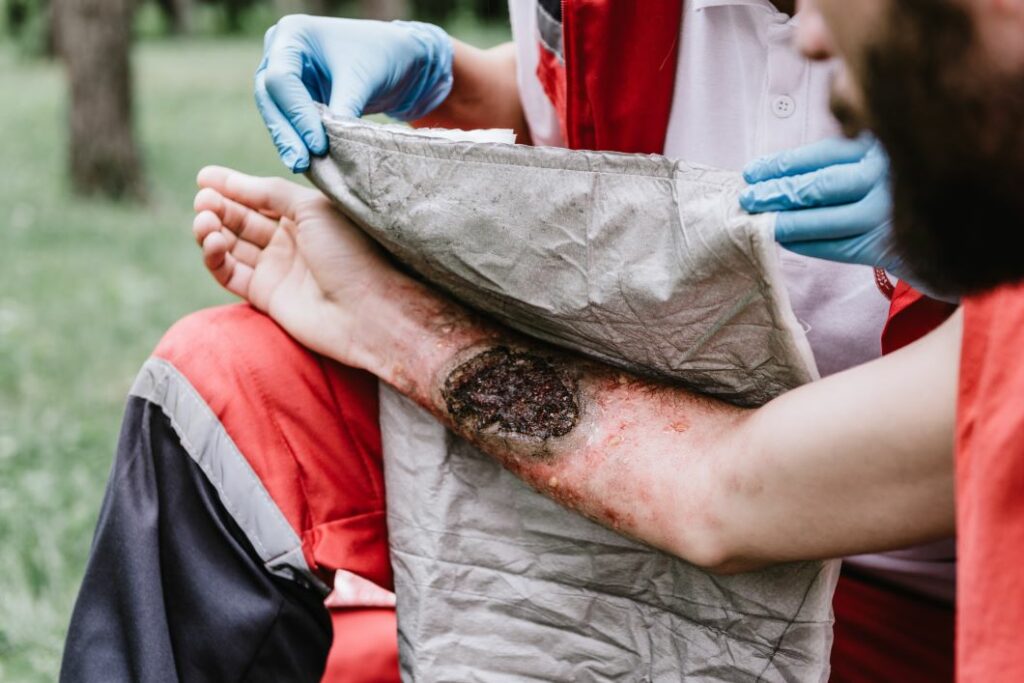
Burns gain from amazing running water for at least twenty mins. The moment matters. Do not utilize ice. Do not stand out blisters. Eliminate rings or limited clothing early prior to swelling sets in. In numerous winery or kitchen setups around Maitland, scalds prevail, so rehearse the easy action in your head.
Seizure emergency treatment is commonly examined with a scenario that makes students panic. Keep it straightforward. Shield the head, time the seizure, and clear risks. Do not limit limbs or put anything in the mouth. When it stops, examine air passage and breathing and roll to healing if the individual remains unresponsive but breathing generally. If the seizure lasts longer than 5 minutes or repeats with no recovery, phone call 000.
How to exercise solo if you do not have equipment
Not everyone has a manikin in your home. You can still construct effective practices simply put, truthful drills. Fold up a towel into a chest‑sized dice and mark a cross in tape where hands need to go. Kneel and exercise hand positioning and body position. Make use of a metronome application readied to 110 and push down strongly to the beat, going for a balanced feel. It will certainly not duplicate chest recoil or resistance specifically, yet it will certainly educate your body the angle and cadence. For rescue breaths, exercise the head tilt and chin lift on a pillow. It appears foolish, and it works.
For bandaging, a tea towel and tape can stand in for a stress clothing. Exercise firm, also wraps, and discover to protect the end without sophisticated knots. If your program includes a sling, a scarf makes a good substitute. The point is not fancy method, it is competence under time pressure.
Working with your instructor, not versus them
Good trainers in Maitland emergency treatment training courses desire you to pass. They also care that you might get the job done in a genuine emergency situation. If you are not exactly sure about a detail, request a demo prior to evaluation begins. During situations, talk clearly and avoid lingo you do not use in life. If you make a mistake, fix it aloud. For instance, if you understand you forgot to send out a person for the AED, say "I must have asked for the AED earlier, sending out for it now," and continue. That shows situational awareness and growth.
Listen for the context the assessor offers. Some circumstances think you are alone. Others include bystanders or work environment devices. Missing out on that context is an usual reason experienced students lose points. If they claim, "You remain in a stockroom with a first aid set on the wall," use it. If they say, "You are alone and you have a mobile phone on speaker with 000," explain your actions accordingly.
Managing nerves so your hands do what your mind knows
Even confident individuals feel their heart price dive when an assessor starts the clock. The best remedy is pattern familiarity. Walk yourself through the initial thirty secs of action a few times the early morning of your assessment. Breathe in through your nose for four, out for 6, twice. Shake your arms and shoulders. That light reset drops stress sufficient to quit unstable hands throughout AED pad placement.
Make peace with blemish. You will not do every step with book elegance. You do not require to. You need to develop safety, recognise dangers to life, start the right action, and sustain it. If you diminish rhythm, time out for one 2nd, reset your hand setting, and get the beat. That beats claiming absolutely nothing is wrong.
Choosing the best training course format in Maitland
Between a full first aid course in Maitland, a CPR‑only choice, and incorporated first aid and cpr programs Maitland, match the course to your need. Child care personnel frequently need certain units that include bronchial asthma and anaphylaxis. Building workers could only need yearly mouth-to-mouth resuscitation with a three‑yearly emergency treatment revival, though some companies prefer yearly refreshers for both. If your routine is limited, a mixed version with online concept and a much shorter in‑person practical might match. If you discover best by doing, pick a company that promotes extended circumstance time.
Providers across Maitland provide weekday, weeknight, and weekend sessions. If you are doing your first aid certification Maitland for compliance, check that the company problems across the country acknowledged statements of attainment and notes the exact units. If you see ICY language or obscure promises, ask concerns. Trusted service providers define HLTAID units, evaluation needs, and revival periods clearly.
Renewal etiquette and staying current
Skills fade. The ratio info and AED prompts will likely continue to be stable for some time, yet little changes do happen for many years as evidence updates. Mouth-to-mouth resuscitation training courses Maitland are typically renewed annually. Complete first aid programs Maitland are often restored every 3 years, with CPR upgraded yearly in between. If your duty entails high risk tasks or constant public get in touch with, lean to the traditional side and rejuvenate more often.
In in between programs, do what many skilled initial aiders do. Every few months, run a two min self‑drill on DRSABCD and mouth-to-mouth resuscitation rhythm. If your workplace has an AED, evaluate it quarterly for pad expiry and battery condition. That light touch maintains rust off. When an actual occasion occurs, you will certainly not be starting from cold.
Real globe tales that stick
The most effective initial aiders I have trained lug a few mental images into every assessment and every genuine phone call. A dad that located his young child blue and made use of back strikes and upper body drives equally as he practiced on a doll. A retail employee in Maitland that used a tourniquet to a deep laceration from a box cutter and kept a calm line with 000 until paramedics got here, saving a co‑worker from life‑threatening blood loss. A jogger near the river that fell down and obtained speedy compressions from 2 bystanders until an AED from a close-by sports club provided a shock. In each situation, the actions were not made complex. They were done rapidly, without drama, and in the best order.
You can reproduce that readiness. The assessment is not a method. It is a wedding rehearsal for something you may, someday, have to do for real.
A final move prior to you walk in
Give on your own 5 mins in the cars and truck or on the path before your Maitland emergency treatment analysis. State DRSABCD gently to yourself. Visualise putting AED pads top right and side left. Listen to the chirp of the metronome in your head. Image your hands forming a sling with a triangular bandage. Remind on your own to talk an onlooker's participation out loud. Then quit assuming and go practice.
That is exactly how you lug your work into the room and come away with your certification, and a lot more significantly, with abilities that hold up when somebody requires them. Whether you train with a long‑standing Maitland emergency treatment course company or a newer outfit aligned with national criteria, the exact same principles use. Prepare with objective, exercise with intention, and the assessment will seem like an action you prepare to take.